

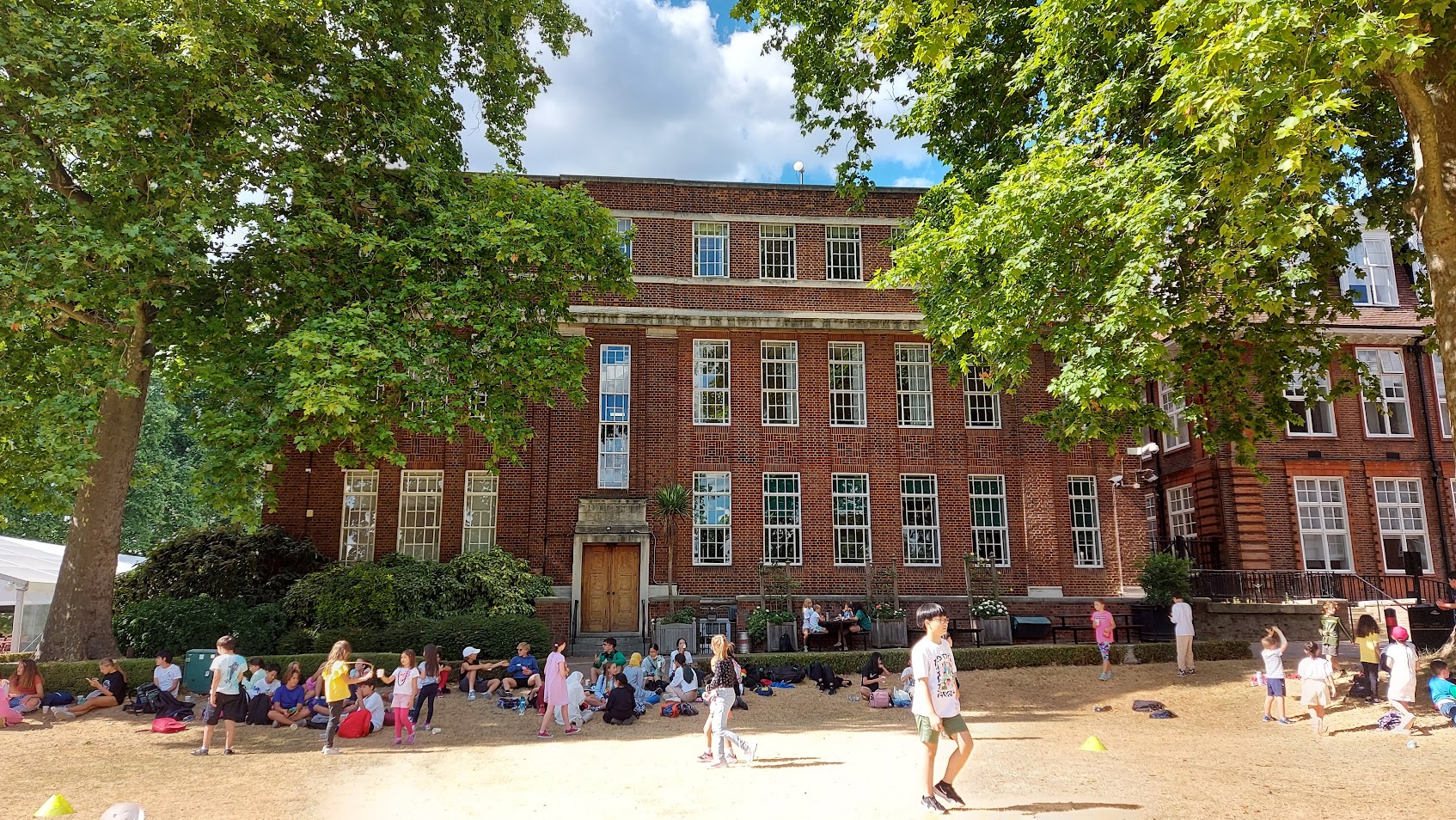
EL Gazette sits down with Ben Toettcher, director of SKOLA English in London, and Connor Middleton, school principal, to discuss the integration of AI, its impact on teachers and students, and their vision for the future of English language education.
SKOLA English in London, with over 50 years of experience in ELT, is embracing generative AI (Gen AI) to elevate its teaching practices and provide a truly personalised and engaging learning experience for its diverse student body.
The school’s primary motivation for adopting Gen AI stems from the inherent complexities of teaching English to students from 70 different countries, across seven proficiency levels, all with unique learning needs. “They are only here for a week or two and they want to learn something – facilitating this effectively is really, really hard,” admits Ben Toettcher.
He explains that the challenge lies in accurately assessing individual strengths and weaknesses and then tailoring lesson plans and resources for each of the 16 students in a typical class. “Some of the things that we’re using Gen AI to do can only really be done by it, I would say,” he says.
A key application is the analysis of spoken English tests. SKOLA conducts 20-minute spoken tests with students, and Gen AI transcribes these conversations, summarising individual strengths and weaknesses in real-time. This invaluable data is then integrated into each student’s profile, providing teachers with immediate, in-depth insights into their new students before they even step into the classroom.
Gen AI cross-references student data with SKOLA’s curriculum, incorporating elements like interlingual transfer errors common to different nationalities and aligning with their five-stage lesson plan structure. This allows teachers to produce highly individualised lesson plans that genuinely meet the diverse needs of their students. “What we’re asking of our teachers would be impossible without AI, I think. It would just be too time consuming,” says Toettcher.
SKOLA’s AI tool of choice for lesson planning and material creation is Google Gemini, which is integrated into its existing Google suite. They also use ChatGPT for its strong critical thinking capabilities and Manus for multi-step programmes, particularly in student recruitment.
The impact on teachers has been profound. Connor Middleton highlights how AI assists teachers in understanding and addressing common misconceptions specific to different nationalities. “One question we ask Gemini and ChatGPT is what the common misconceptions students from countries are likely to have regarding the current learning objective. It’s what a very experienced highly skilled teacher would ask, and we ensure that question is asked for every lesson.”
This immediate access to tailored strategies has also accelerated teacher development, says Middleton. Speaking to EL Gazette just five weeks into its introduction, Middleton says, “We’ve already got to the point where teachers are saying the initial ideas AI gave the were too basic, where before they thought they were the best thing since sliced bread.” This demonstrates how Gen AI acts as a continuous professional development tool, pushing teachers to refine their prompts and develop more sophisticated approaches.
Identifying gaps in learning
The ability of Gen AI to identify learning gaps is a game-changer for personalised education, says Middleton. Through the analysis of transcribed speaking tests, Gen AI can pinpoint specific areas where a student struggles, such as the consistent misuse of articles for a Polish student. This precise diagnostic information is then fed back to the teacher, enabling them to focus on those specific areas in class, ensuring truly individualised learning.
Toettcher adds that personalised learning, or “diagnostic learning” as he calls it, requires a vast amount of data. “The online test generates that data, particularly with the intermediate level students… This way, teachers receive the information early and can incorporate it into their lesson plans.”
While Gen AI primarily supports teachers in planning and preparation, its presence in the classroom is an indirect, yet powerful, enhancement. Students are not directly using AI tools themselves; instead, the technology empowers teachers to respond dynamically to classroom needs. Middleton explains: “When the teacher realises that they’ve pitched the level too low, and now they need to challenge the students more… AI generates some ideas for them. I’ve seen this happen in real time in an observation and actually, it worked out really well.” This approach ensures that AI complements, rather than replaces, human interaction.
Toettcher likens AI to “another intelligence in the room that helps us do something that’s very, very complicated.” The aim is always to enhance the existing framework of the curriculum and teaching methodologies. As Connor puts it, “It’s about the enhancement. It’s not about replacement.”
Operational efficiencies
Recruiting excellent staff is paramount to providing a high-quality summer school experience. SKOLA uses Gemini, built into its Google Workplace account to help evaluate interviews. “All our initial interviews are done through Google Meet, we record each and transcribe candidates’ answers and ask Gemini to evaluate the responses against a set -criteria based on teaching knowledge, general intelligence, leadership qualities and SKOLAness,” says Middleton.
Toettcher continues, “We’re employing SKOLA Trained AI Agents to handle common enquiries, such as programme details, pricing, and accommodation options, providing instant answers and freeing up our sales team to focus on more complex enquiries on our website. A summary of the questions parents asked last year has created our FAQ section. We’re also using software to help us generate personalised email responses that address specific questions and concerns, creating a more engaging and responsive customer experience.”
Future outlook
SKOLA is acutely aware of the ethical implications of using AI in education. Data privacy is paramount, especially concerning student information. The school ensures that only relevant, anonymised data from speaking test transcripts is used, with parental consent obtained beforehand. SKOLA also exclusively uses paid-for AI, which guarantee that user data is not used to train AI models. Middleton warns, “When it’s free, it’s because you’re the product and they sell your data”.
Another significant consideration is the environmental cost of large language models, which consume considerable energy. However, SKOLA believes this investment is justified by the enhanced intelligence and learning outcomes it provides.
Looking ahead, SKOLA is optimistic about AI’s continued evolution. “Every time there’s a sort of a half increment, it seems to go from GCSE to A-Level, to graduate, to post-doctoral sort of level,” says Toettcher. He and Middleton firmly believe that AI fosters greater intelligence in teachers, rather than making them reliant. As Middleton explains, “If you use AI, you get into a habit of thinking more intelligently… you learn so much, you’ve learned how all these different elements contribute to a positive student experience.”
Ultimately, SKOLA sees AI as a powerful tool that it uses to deliver on its promise of high-quality, personalised English language education, ensuring that students from across the globe have the most engaging and effective learning experience possible. And while its implementation is in its early stages, the feedback they have had so far suggests student engagement levels – which were already high – are rising every day.
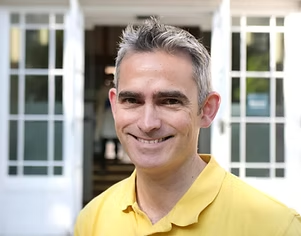
Ben Toettcher, Director
Ben Toettcher has 25 years’ experience of teaching and management in English Language, National Curriculum, and IB schools. He has a CELTA and DELTM (Diploma in English Language Teaching Management) and loves meeting families from all over the world to learn more about their culture.
Connor Middleton, Principle

Connor Middleton is committed to ensuring teaching at SKOLA is of the highest possible standard. He develops teachers’ expertise and makes sure classes at SKOLA are informative and fun. He has a TEFL qualification, a BSc in Psychology in Education, an MA in Education, and a PGCE. He is also SKOLA’s designated safeguarding lead.