

Dimitris Kouniakis and Constantina Constantopoulou investigate.
Do you feel that students struggle to stay focused longer than a few minutes? Have you noticed that even motivated learners often find it hard to engage with content, follow a line of thought, or work deeply for longer periods of time? Is sustained attention harder to achieve year after year? If so, you are neither imagining it nor exaggerating, and certainly you aren’t alone.
Before we blame lesson design, instructional practices, and even ourselves as educators, it is worth examining something far more subtle, yet incredibly powerful; the role of smartphones in students’ cognitive lives. Smartphones, with their endless notifications, social feeds, and messaging apps pose a unique threat to deep cognitive engagement. And it doesn’t have to do with frequency of use. Simply having them around is enough.
Welcome to the concept of attention residue, a key phenomenon that helps explain why focus has become such a fragile resource in today’s classrooms and study spaces.
What is attention residue?
The term attention residue was introduced by organisational psychologist Sophie Leroy to describe what happens in our minds when we switch from one task to another without fully finishing the first.
In her landmark 2009 research, Leroy found that when people move between tasks, part of their attention doesn’t immediately follow. Instead, a portion of the mind stays “behind” or “stuck” on the previous task. This leftover mental activity, the residue, reduces performance on the task at hand. People become slower, less accurate, and less capable of deep or creative thinking. In simple terms, even when we think we have shifted our focus, our brain hasn’t fully caught up.
How it affects studying?
Now, let’s bring this into the learning context.
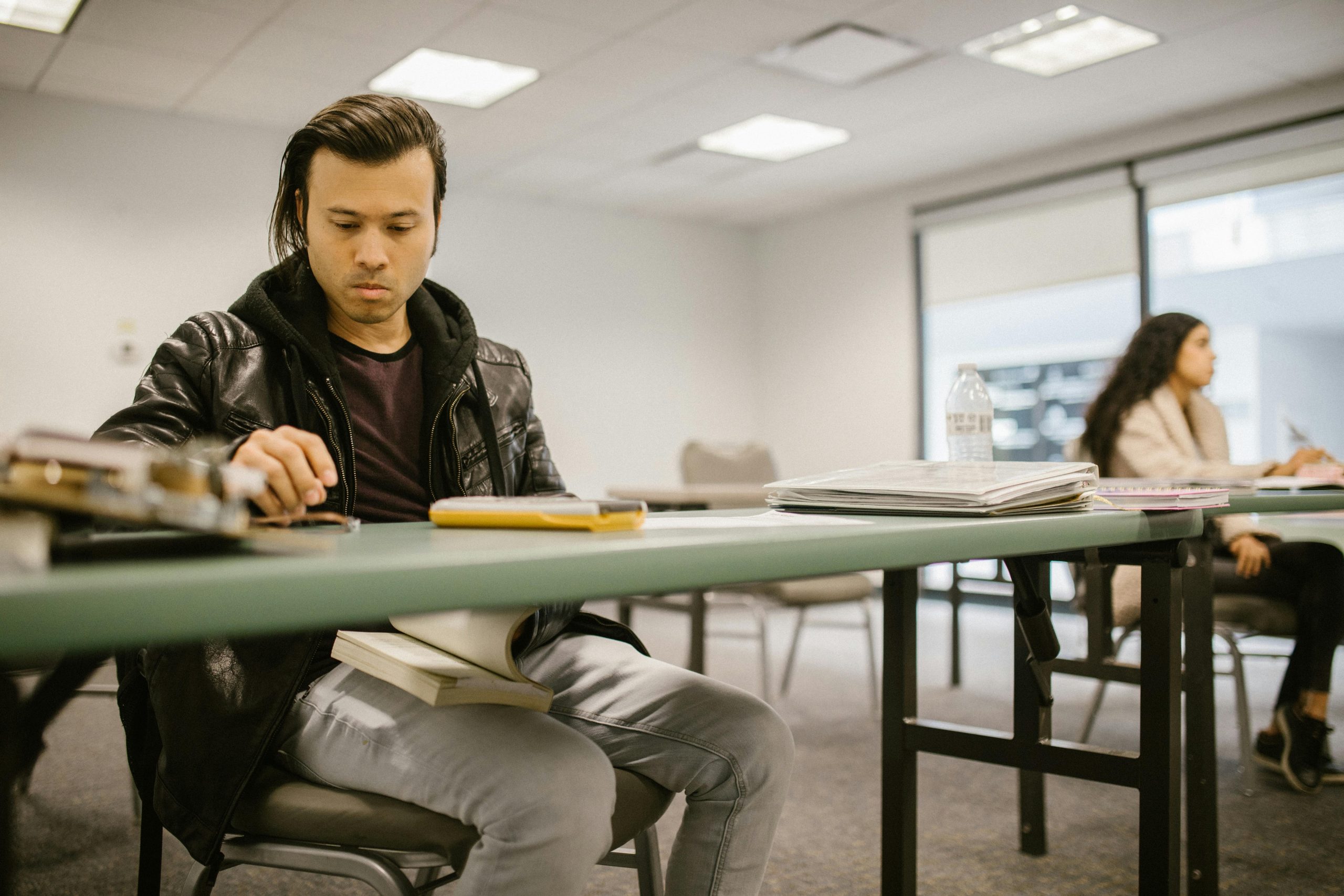
Imagine a student reading a text or drafting a piece for a writing activity. A notification pops up. They glance at their phone, just for a second. They then return to their work. From the learner’s perspective, the interruption seems harmless. But cognitively, something important has happened. Part of their attention remains anchored to the notification, that message asking for a reply, that post they want to follow up, that reaction they didn’t anticipate.
Focus doesn’t instantly reset. The brain is now multitasking, splitting resources between the learning task and the lingering mental thread of the interruption. This is attention residue in action. Over time, these tiny disruptions add up. What feels like “studying for an hour” often becomes an hour of fragmented effort, shallow processing, and eroded learning impact.
The hidden cost of task switching
Leroy’s work fits neatly within a broader body of research in cognitive psychology and the science of learning showing that task switching is expensive. Every switch, no matter how small, requires time and mental energy to recover from. When smartphones buzz repeatedly, learning is interrupted. Students don’t just lose seconds; they lose cognitive momentum. Instead of reflecting, analysing, and synthesizing, the brain gets tied on a loop of stopping and restarting. The outcome? Lower comprehension, reduced retention, increased mental fatigue, and a false sense of productivity. Learners may feel busy studying, but for sure they aren’t busy learning.
Even a silent phone is a distraction
Here’s where things get more interesting and even more concerning.
Research shows that a smartphone doesn’t need to be used to cause distraction. Having it visible or within reach can reduce available cognitive capacity. The brain, anticipating possible notifications, allocates part of its working memory to monitoring the environment. This “just in case” attention drain means fewer mental resources are available for learning. In other words, the phone becomes a background cognitive load.
What can actually help
If attention is fragile, the learning environments must actively protect it.
One of the most effective, evidence-based strategies is surprisingly simple: Create physical distance between students and their smartphones during study or learning periods. This might mean leaving phones in another room, placing them in a drawer, or using airplane mode. The goal isn’t punishment or control, it’s cognitive support. By removing the trigger for task switching, we reduce attention residue before it even starts. This translates to longer periods of sustained focus, faster immersion in learning tasks, and higher quality thinking and output.
Conclusion
In today’s attention-fragmented learning landscape, focus has become a skill that needs safeguarding and coaching. Attention residue reminds us that distraction isn’t just about willpower. It’s essentially about how the brain works. Leroy’s findings make one thing clear; every interruption leaves a trace that weakens attention. For students who already struggle with concentration, executive function, and cognitive overload, smartphones are quietly but significantly undermining their learning. By encouraging intentional distance from devices during study, we help learners reclaim their attention, reduce mental clutter, and engage with content deeply. Managing the learning environment isn’t optional anymore; it’s a necessity. Having said that, meaningful support doesn’t begin with new strategies but with well-designed attentional space.
References
Leroy, S. (2009). Why is it so hard to do my work? The challenge of attention residue when switching between work tasks. Organizational Behavior and Human Decision Processes, 109(2), pp. 168–181. https://doi.org/10.1016/j.obhdp.2009.04.002
Leroy, S. and Schmidt, A.M. (2016). The effect of regulatory focus on attention residue and performance during interruptions. Organizational Behavior and Human Decision Processes, 137, pp. 218–235. https://doi.org/10.1016/j.obhdp.2016.07.002
About the authors
Dimitris Kouniakis has over 25 years of experience as a TESOL/ TEFL educator and has delivered teacher training workshops for international organisations. He holds an MA in TESOL and specialises in inclusive instructional practices and educational technology.
Constantina Constantopoulou has been a TESOL educator and teacher trainer for 15 years. She specialises in inclusive lesson design and leadership in education. She holds a Med in Special Education and an MSc in Education Management.