



The case of the Count/Mass Distinction in English, by Eloy Romero Muñoz, PhD, Université de Mons, Belgium.
Textbooks are one of the defining features of the language classroom. They provide structure, sequence learning, and often function as a de facto syllabus aligned with national or international standards. Teachers rely on them for planning, parents may see them as a guarantee that “the necessary” material will be covered, and learners themselves are often drawn to their promise of accessible and manageable learning.
Yet the central role textbooks occupy in language education also raises an important question: can we actually count on textbooks to teach grammar effectively? Some researchers have urged caution. Burton (2023), for instance, points to the persistence of grammatical “rules” that are widely reproduced in textbooks despite offering learners only a partial or misleading understanding of how language works.
More specifically, this article argues that grammar textbooks may create difficulties for learners when they reduce grammatical distinctions to lists of forms and rules detached from meaning. Using the Count/Mass distinction in Murphy’s Essential Grammar in Use as a case study, I discuss three issues in particular: the focus on surface-level patterns, the presentation of forms without clear pedagogical logic, and the limitations of textbook visuals.
- When grammar becomes a list of rules and exceptions
Murphy’s EGU devotes two units to the CMD. Unit 67 focuses on a very general discussion of the difference between countable and uncountable nouns, while Unit 68 provides more information on quantifiers (section A), on words that can be both countable and uncountable (section B), as well as words that can only be uncountable (section C). Aside from its trademark left-hand page for theory, right-hand page for practice design, Murphy’s EGU is also characterised by the use of minimal pairs to illustrate grammatical features. This binary logic is also applied to the CMD as illustrated in Figure 1.

Figure 1. Minimal Pairs for the CMD (EGU, p. 144)
Focusing on prototypical cases, i.e., words that are strongly associated with either count or mass usages, is commendable. Doing so helps learner build general categories that can be refined as they encounter more marginal cases. However, considering some as a defining feature of MASS nouns poses two major issues. We used Sketch Engine to query a selection of corpora: the English Web Corpus and the BNC spoken[i]. The picture that emerged was much more nuanced than what is presented in EGU. If some and some of do indeed cooccur with mass nouns, neither do exclusively do so.
Quite the contrary as there seem to be a stronger correlation with plural count nouns. It would thus seem preposterous to consider some as a criterial feature of mass nouns. Similarly, some semantic fields such as food lend themselves better to an approach that promotes category building. While not focusing on a single theme, EGU provides examples that are both frequent and whose usage is prototypically count or mass such as key, house, bottle and water. As illustrated in Figure 2, EGU also provides a series of partitive quantifiers, of which all but one (“a game of tennis”) meet the frequency and usage criteria we have just mentioned.

Figure 2. Partitive quantifiers in EGU (p. 144)
Another issue with the use of quantifiers in the title highlights quantifiers, which are symptomatic rather than constitutive aspects of the CMD (Drożdż, 2017). As far as the CMD is concerned, this entails that learners will almost exclusively attend to surface-level phenomena such as pluralisation and quantifiers as illustrated in Figure 3. Learners will learn what the CMD looks like, but not why it is a meaningful linguistic distinction in the first place.
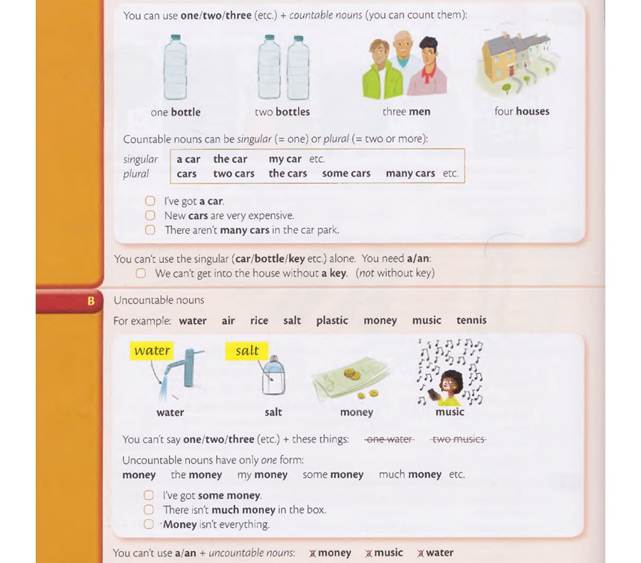
Figure 3. Focus on Surface-Level Phenomena in EGU (p. 144)
- When textbooks create ambiguity
Learners might also be perplexed by the many different forms that are provided in the explanation for count and mass nouns. EGU uses articles (a, an, the, and the zero article), possessive determiners (my), indefinite determiners (some, many, much), cardinal numbers (one, two, three, four) as well as the irregular plural form men which appears quite inexplicably alongside a series of regular -s plural forms.
The use of boldface, italics and parenthetical glosses as textual enhancement is commendable seeing as though visually modifying input constitutes an “implicit and unobtrusive way” of directing learners’ attention to new forms (Nassaji & Fotos, 2011, p. 41), which can help them understand how to use said forms in meaningful contexts (Lee & Huang, 2008). Figure 4 illustrates how EGU uses boldface to highlight that mass nouns “only have one form”.

Figure 4. Uncountable nouns have only one form (EGU, p. 144)
Again, my experience tells me that learners may not view the series of noun phrases that are provided as “only one form”. More fundamentally, EGU does not seem to be using boldface consistently; this input enhancement technique is used to highlight determiners, nouns, and noun phrases without apparent logic. A similar point can be made about the use of italics in this section. The use of parenthetical glosses poses an additional problem. To illustrate the necessity of using an indefinite article with singular count nouns as in “We can’t get into the house without a key”, EGU provides the following gloss between brackets: “not without key”. There is no indication that this form is otherwise erroneous. My experience as a language instructor tells me that learners are likely to view both formulations a synonymous instead. The same goes for the examples for count nouns illustrated in Figure 5.

Figure 5. Illustrating countable nouns in EGU (p. 144)
What is a learner to make of the quantifier between brackets? Is it optional or mandatory? Why are there two different quantifiers? While EGU does provide a cross-reference to Unit 65 where this specific issue is dealt with, the information is displayed at the bottom of the page rather than here where it might be most useful (see Figure 6).

Figure 6. Cross-reference to Unit 65 in Unit 67 (EGU, p. 144)
- When illustrations work, and when they don’t
Illustrations are another type of input modification. According to Levin (1981), illustrations can serve different functions in a text:
- “decorational” illustrations do not contribute directly or substantially to the meaning;
- “representational” illustrations mirror the contents;
- “organisational” illustrations provide a roadmap.
- “interpersonal” illustrations clarify difficult text;
- and “transformational” illustrations offer a mnemonic component.
Most illustrations in EGU are representational (as in Figure 7) and transformational (as in Figure 8). Both types have been shown to facilitate learning (Levin et al., 1987).

Figure 7. Representational pictures in EGU (p. 44)

Figure 8. Transformational pictures in EGU (p. 144)
Visuals that are unclear may do a disservice to learners though. The illustration for “salt” and “water” (see Figure 8) are a case in point. The illustration is captioned “salt” and there is another highlighted gloss that also reads “salt” yet points to the middle of the illustration. How is a learner to understand that both the caption and the gloss refer to the substance as opposed to the container? A similar point can be made about the illustration for water as opposed to the faucet.
Conclusion
Textbooks simplify grammar because they must. Teachers need material that can be sequenced, practiced, revised, and assessed within limited classroom time. In that sense, Murphy’s Essential Grammar in Use succeeds remarkably well. The logic in EGU derives from a need to sequence learning into what Thornbury (2010) aptly called “Grammar McNuggets”, i.e., conveniently selected, bite-sized chunks of grammar that are easy to present, practice and evaluate independently. Yet the very features that make grammar textbooks pedagogically manageable may also limit the kind of grammatical understanding learners develop.
The examples discussed throughout this article suggest that the Count/Mass distinction is often presented primarily through surface features such as plural marking, articles, and quantifiers. Learners are shown what count and mass nouns “look like,” but not necessarily what it means to construe something as countable or uncountable in the first place. Similarly, textual enhancement techniques and visuals, although potentially helpful, may also create ambiguity when learners are left to infer what exactly is optional, incorrect, or conceptually relevant.
This does not mean that grammar textbooks are useless, nor that simplification should be avoided altogether. Simplification is an inevitable part of pedagogy. The problem arises when simplification obscures the meaningful nature of grammatical distinctions and encourages learners to approach grammar as a collection of isolated forms and exceptions rather than as a system linked to meaning. This is arguably not the best way to learn a language.
[i] I calculated the cooccurrences of some (up to four words) and of “some of” (up to five words). I then classified the results by T-score, which indicates which words are more frequent and extracted nouns. The final operation consisted in selecting the relevant nouns as well as quantifiers.
References
Burton, G. (2023). Grammar in ELT and ELT materials. In Multilingual Matters eBooks.
Lee, S., & Huang, H. (2008). Visual input enhancement and grammar learning: A meta-analytic review. Studies in Second Language Acquisition, 30, 307–331.
Levin, J. R. (1981). On functions of pictures in prose. In F. J. Pirozzolo, & M. C. Wittrock (Eds.). Neuropsychological and Cognitive Processes in Reading. New York: Academic Press.
Levin, J. R., Anglin, G. J., & Carney, R. N. (1987). On empirically validating functions of pictures in prose. In D. M. Willows & H. A. Houghton (Eds.). The Psychology of Illustration: Vol. 1. Basic Research. New York: Springer-Verlag.
Murphy, R. (2015). Essential grammar in use (4th edition). Cambridge University Press.
Nassaji, H., & Fotos, S. (2011). Teaching grammar in second language classrooms: Integrating form-focused instruction in communicative context. Routledge.
Thornbury, S. (2010, September 18). G is for Grammar McNuggets. An A-Z of ELT.