



We speak to author Bill Bowler about his debut collaboration with Fiction Express, a language proficiency solution that promotes comprehension, expression, and critical thinking by stimulating creativity and a love of reading.
Writer and English Language Teaching (ELT) specialist Bill Bowler has just completed his first project with Fiction Express: the sci-fi adventure The Ripple Effect, set in present-day Cambridge. When the collaboration began, he didn’t predict how much it would shape his approach to writing, or the immediate impact it would have on language learners.
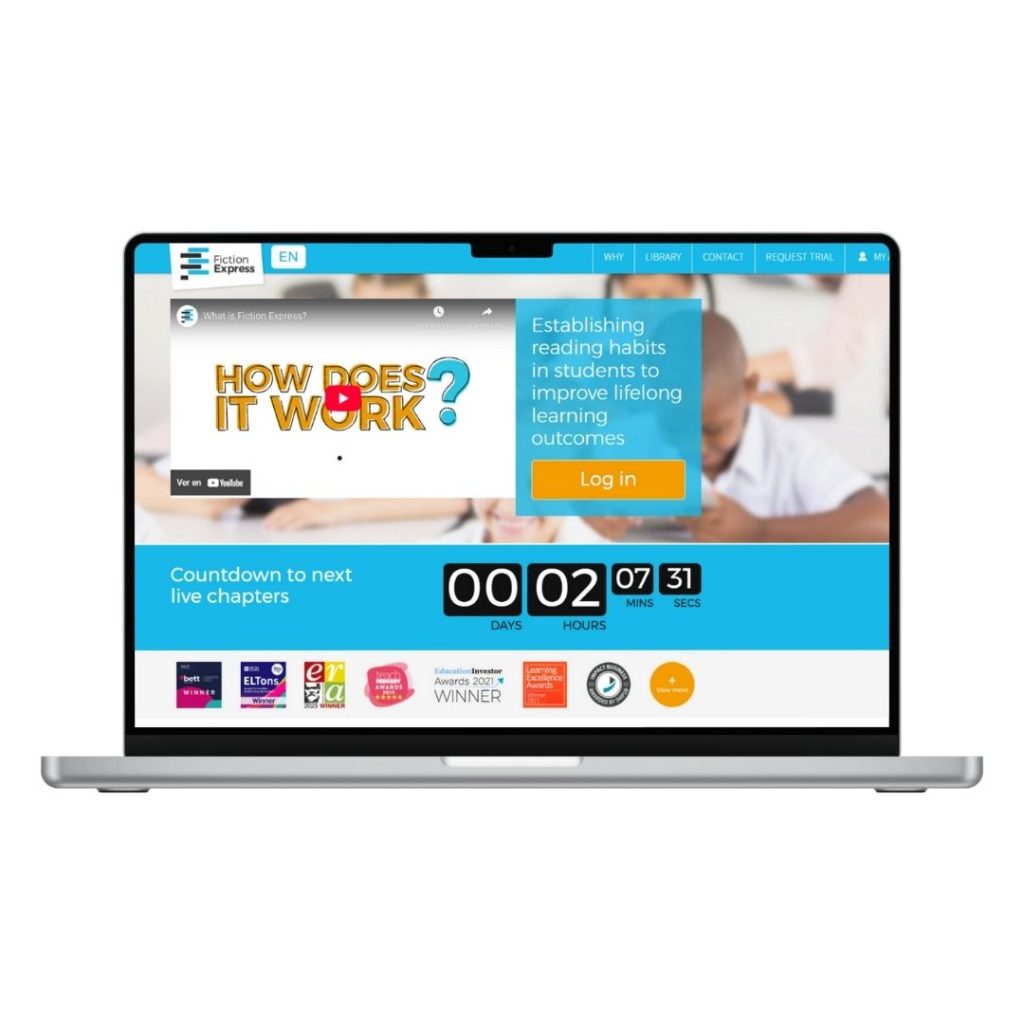
The Fiction Express platform connects authors with school groups worldwide, many of whom are studying English as a second language. The unique mechanism sees students vote each week on what should happen next, with the author writing the following chapter in direct response. For Bowler, who is well known for his graded ELT readers and educational materials, the experience combined the thrill of live storytelling with the positive impact of language teaching. “It was exhilarating,” Bowler reflects. “Some of the suggestions were even better than what I had planned.”

Voices from around the world
Bowler’s The Ripple Effect attracted engagement from students as far afield as Mexico, Honduras, Spain, Guatemala, Greece, and the UK. To accommodate readers’ varying ability, each chapter appears in multiple versions, tailored for different language levels. Teachers guide classroom discussions, and students vote together on what happens next: should the heroes remain in a dystopian future or return to their own time? Should they face danger head-on or find another way to solve the puzzle?
“The students didn’t just read the story,” says Bowler. “They influenced it. For example, I’d originally planned for the protagonists to leave the future world quickly, but students voted overwhelmingly for them to stay. It made the story much more exciting. In another chapter, they suggested ways to solve the main puzzle earlier than I’d intended, which added tension and pace.”
The platform includes both higher-level and simplified editions of each chapter, ensuring that students at lower ability levels can still access the story but at a pace that challenges and motivates them. “I have decades of experience with graded readers,” Bowler says, “but Fiction Express takes it to a different level. I focus on the narrative, while their team handles the language scaffolding – vocabulary lists, grammar exercises – it’s a brilliant division of labour.”
The creative challenge
Writing for Fiction Express comes with a unique set of pressures. “The first chapter is everything,” Bowler explains. “It sets up the puzzle. You want teenage readers hooked from the start, which is no small feat.” Working to weekly deadlines, he would finish each chapter, record the audio, review student feedback, and then begin crafting the next installment—all while staying one step ahead of hundreds of curious readers.
Some of the suggestions surprised him. “One class voted for a completely different path for a key character, which turned a minor scene into a dramatic turning point. Another suggested keeping a new villain alive longer to create suspense. Their input genuinely improved the story.”
Stories that teach
Bowler’s background in ELT gave him a solid foundation in writing accessible narratives, but even he found new challenges in this format. “There’s an incredible balance to strike,” he says. “You’re writing fiction that must be compelling while also being right for language learners. My instincts were shaped by years in ELT, but Fiction Express opened a more dynamic mode of storytelling.”
Each chapter is accompanied by language-focused exercises, quizzes, and class discussion prompts, all developed by the Fiction Express team. While Bowler concentrated on crafting gripping scenes, teachers guided students to express their opinions, summarise content, and practise new vocabulary.
“The teacher’s role is crucial,” says Bowler. “It’s all run through schools, and the feedback is class-based. Teachers help kids understand their options – and that’s where a lot of the language learning happens.”
Character visualisation and social media
To bring his characters to life, Bowler used AI tools to generate visual images of the protagonists and shared them as part of a social media campaign. Students loved visualising the characters, and some even animated them — creating excitement beyond the reading platform. “It made the story more tangible,” he says. “The students really connected with the characters.”
After completing The Ripple Effect, Bowler is eager to write another story with Fiction Express. A second book is currently in the commissioning stage, and he hopes to begin over the summer for a September launch. He is committed to providing additional materials, including character images and chapter summaries, to support teachers and students in future runs.
Reflecting on the experience, Bowler concludes: “It made me more alive to my audience. You’re writing, knowing that you’ll have direct contact with your readers every week – and that they’ll tell you what they think. That’s something traditional publishing rarely offers. Fiction Express has created a space for connection, for co-creation. That’s exciting for writers – and transformative for learners.”
This article was originally published in the November issue of EL Gazette. Subscribe here to read the magazine in full.